
Repeated pressure corns are thickened areas of skin that develop on the feet due to continuous pressure or friction. These corns typically form on the toes or the soles of the feet and can be quite painful, especially when walking or wearing shoes.
What Causes Repeated Pressure Corns?
- Ill-Fitting Shoes: Wearing shoes that are too tight, too loose, or have high heels can create excessive pressure and friction on certain parts of the feet.
- Abnormal Foot Mechanics: Conditions such as bunions, hammertoes, or other foot deformities can lead to uneven pressure distribution.
- Repetitive Activities: Activities that put consistent pressure on specific areas of the feet, such as running or standing for long periods, can contribute to the development of corns.
- Poor Foot Care: Lack of regular foot care can allow pressure points to develop, leading to corns.
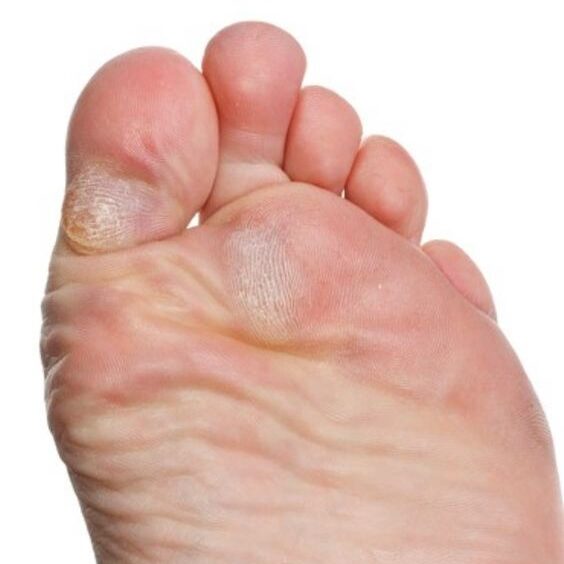
Symptoms
- Hard, Thickened Skin
- Pain and Tenderness
- Raised Bump
- Dry, Waxy, or Transparent Appearance
Can It Be Cured?
While repeated pressure corns can be effectively managed and treated, they may recur if the underlying causes are not addressed.
Treatment Options:
- Proper Footwear: Wearing well-fitted shoes with adequate room and cushioning to reduce pressure points.
- Protective Pads: Using corn pads or cushions to protect the affected areas and reduce friction.
- Debridement: A podiatrist can carefully trim and remove the thickened skin to relieve pain and prevent further irritation.
- Moisturizing: Regularly moisturizing the feet to keep the skin soft and prevent hardening.
- Orthotics: Custom orthotic inserts can help distribute weight more evenly and reduce pressure on vulnerable areas.
- Foot Soaks: Soaking the feet in warm water to soften the corns before attempting to gently file them.
- Medications: Applying over-the-counter salicylic acid treatments can help soften and break down the thickened skin.
At Phoenix Diagnocare, we specialize in the diagnosis and treatment of repeated pressure corns. Our comprehensive approach includes detailed assessments, personalized treatment plans, and ongoing support to help you manage symptoms and maintain healthy, pain-free feet.
Self-Help Foot Care
Do’s & Don’ts
Over 190 million people in the world suffer from diabetes. Many people with diabetes lose the feeling and may not be aware of skin developing into infected ulcers. Left untreated, the infection spreads, leading to gangrene which requires amputation.
Walking barefoot or wearing unsuitable footwear are common causes of foot ulcers in developing countries like India.
India being the diabetic capital of the world has more than 35 million people affected by diabetes currently with future estimation of around 80 million people in 2030.
Rough estimates indicate 40,000 lower limb amputations per year, most of them due to diabetes.
Do’s
- Examine your feet everyday to look for cuts, sores, blisters and redness (if required use a mirror)
- Wash your feet everyday with lukewarm water and mild soap. Dry them carefully with a soft towel. If required, use spirit to swab between toes.
- If you have dry skin, use a moisturizing lotion or coconut oil or petroleum jelly but don’t use it between the toes.
- Inspect shoes everyday for small stones or other foreign bodies.
- Wear cotton socks with loose elastic.
- Contact your doctor/clinic immediately if your foot becomes swollen or if painful or if redness occurs.
- Learn all about diabetics.
Don'ts
- Don’t go barefoot.
- Don’t wear shoes without socks.
- Don’t wear tight shoes.
- Don't wear new shoes for more than one hour.
- Don’t use chemical corn removers
- Don’t perform bathroom surgery on corns.
- Don’t use hot water bottles or heating pads, ice packs or infrared lamps on your feet.
- Don’t use hot water or soak your feet in water for a long time.